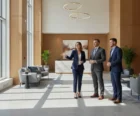
Luxury residents notice the details that ordinary operations can overlook: how quickly a maintenance request is answered and whether shared spaces feel genuinely cared for. They also notice whether service matches the promise made during the leasing tour. For owners, those details shape resident satisfaction, occupancy, rent growth, and long-term asset value.
Answer: Effective luxury apartment management combines responsive maintenance, thoughtful resident engagement, consistently excellent amenities, and disciplined operations that protect both the resident experience and the property's performance.
The standard is not simply to offer a rooftop lounge, fitness center, or resort-style pool. It is to make every part of the community feel intentional, reliable, and aligned with the expectations of Class A residents. That requires a service model that pairs local attentiveness with professional systems, clear communication, and measurable operating standards. The distinction begins with understanding why premium properties demand more than a conventional management playbook.
Talk with HH Red Stone about your luxury apartment portfolio
What Makes Luxury Apartment Management Different?
Answer: Luxury apartment management combines the personal attention residents expect from a boutique operator with the systems, reporting, and operational discipline required to protect a Class A asset. The difference is not simply a polished lobby or a longer amenity list. It is the consistency of the experience, from the first leasing interaction through maintenance, renewal, and everyday communication.
Standard management often focuses on keeping core functions moving: collecting rent, responding to work orders, and maintaining compliance. Those responsibilities still matter in a luxury community, but the service standard is higher. Residents expect prompt answers, professional interactions, clean and well-maintained common areas, and a team that notices issues before they become visible problems. Owners expect that service to support occupancy, year-over-year rent growth, and long-term asset value.
Boutique service at professional scale
Effective luxury apartment management makes residents feel known without making operations dependent on one individual. On-site teams should understand the property, its residents, and its service priorities. Behind them, centralized operations and regional leadership provide consistent processes, accountability, and support. This combination allows a management company to remain responsive while handling the reporting, staffing, budgeting, and performance oversight expected by professional owners.
Communication is a major differentiator. A resident should receive clear updates about a maintenance request, a building project, or an account question rather than having to chase the office. Owners should receive timely information about performance, emerging risks, and opportunities to improve the property. That proactive communication builds trust and helps management teams address small concerns before they affect retention or reputation.
Resident experience protects the asset
Class A expectations extend beyond the apartment itself. Resort-style pools, rooftop lounges, fitness centers, study spaces, and social programming only create value when they are clean, functional, safe, and supported by thoughtful service. The management team must coordinate vendors, monitor standards, and connect amenity operations to the broader resident experience.
This resident-centric approach also supports ownership goals. Consistent service can strengthen satisfaction and renewals, while disciplined operations help preserve the physical condition and reputation of the community. HH Red Stone describes its model as boutique service at a professional scale, with responsive maintenance and professional engagement for both owners and residents. Learn more about its luxury apartment management practices and the broader luxury apartment management services that support multifamily performance.
Elevated Resident Services: The Concierge Standard
Answer: Luxury apartment management means making service feel personal, organized, and dependable at every point of the resident experience. The standard is not simply a polished lobby or a fast response to a maintenance request. It is consistent communication, professional follow-through, and a team that understands how daily operations shape both resident satisfaction and asset performance.
Residents in a high-end community expect to be treated as people, not tickets in a queue. That begins with a concierge-level response: acknowledge questions promptly, explain what happens next, and close the loop when an issue is resolved. Clear engagement also matters to owners. They should have visibility into recurring service issues, operational decisions, and the resident trends that affect retention and reputation.
Service standards residents can feel
- Responsive maintenance: Receive requests quickly, prioritize urgent needs appropriately, and communicate realistic timelines rather than leaving residents to guess.
- Professional engagement: Make every interaction respectful, prepared, and solution-oriented, whether the conversation involves a lease question, a repair, or a community concern.
- Transparent updates: Keep residents and owners informed about work orders, vendor activity, disruptions, and completion status.
- Consistent presentation: Maintain clean, orderly shared spaces and ensure on-site teams represent the property with the same care as the physical asset.
- Resident-centric programming: Use social programming and community touchpoints to help residents feel connected without making participation feel forced or performative.
Prompt maintenance is especially important because a small unresolved issue can change how a resident evaluates the entire community. A professional team does more than dispatch a vendor. It identifies patterns, coordinates access, communicates progress, and checks that the work meets expectations. That discipline protects the resident relationship while helping owners identify operational improvements before they become expensive or visible problems.
The best service model combines boutique attention with professional infrastructure. Centralized operations can support regional managers and on-site property teams, while local staff provide the face-to-face presence residents value. This is what it means to deliver boutique service at professional scale: personal accountability without sacrificing systems, reporting, or consistency across a portfolio.
For owners evaluating a management partner, staffing is a direct expression of the brand promise. Explore how elevating resident service standards can strengthen daily operations, resident trust, and long-term property performance.
What Amenities Do Luxury Residents Expect in Class A Buildings?
Answer: Luxury residents expect more than attractive finishes. They look for amenities that make daily life easier, support wellness and productivity, and create authentic opportunities to connect. For owners, the operating standard is not simply installing a resort-style pool or rooftop lounge. It is keeping each space clean, functional, welcoming, and aligned with how residents actually live.
Class A amenity programs commonly include resort-style pools, rooftop lounges, fitness centers, study spaces, and social programming. The strongest results come when management treats these features as resident services rather than static selling points. That means monitoring utilization, responding quickly to maintenance needs, communicating policies clearly, and programming spaces throughout the year. A well-run amenity package can support resident satisfaction, protect the property's reputation, and contribute to occupancy and long-term asset value.
| Residents expect | Well-run luxury management delivers |
|---|---|
| A resort-style pool that feels like an extension of the home | Consistent cleaning, reliable equipment, clear rules, comfortable furnishings, and prompt attention to safety or service issues |
| A rooftop lounge suitable for both quiet downtime and entertaining | Thoughtful furnishing, strong upkeep, reservations or event guidelines, and communication that helps residents use the space responsibly |
| A fitness center with modern equipment and convenient access | Regular inspections, working equipment, hygienic conditions, and a plan for replacing or updating worn assets |
| Study and work spaces that support focus outside the apartment | Reliable internet infrastructure where provided, comfortable layouts, quiet-use expectations, and responsive issue resolution |
| Social programming that creates a sense of community | Events selected for the resident mix, consistent communication, inclusive participation, and feedback loops that improve future programming |

The management layer is what turns amenity investment into a durable operating advantage. Staff should track recurring complaints, identify underused spaces, and distinguish between a capital improvement and a service problem. A lounge may need new furnishings, but it may also need better scheduling. A fitness center may need equipment updates, but it may first need more consistent inspections. This discipline helps owners direct capital toward improvements residents notice and use.
Well-run programming can also strengthen retention. A safe, clean, well-maintained environment and a sense of community are central to a positive living experience, as reflected in property management guidance from industry sources. Transparent, responsive communication reinforces that experience and helps management address small frustrations before they become renewal concerns.
For owners evaluating premium amenities and value-add strategies, the key question is whether the operating plan can sustain the promise made during leasing. Luxury apartment management should connect amenity design, staffing, maintenance, resident communication, and financial goals into one consistent program. That is how amenities support both the resident experience and the asset's long-term value.
How Do Luxury Properties Maintain High-End Standards?
Answer: Luxury properties protect their reputation through a disciplined maintenance protocol that combines prevention, rapid response, measurable utility performance, and sustainable building practices. The objective is not simply to repair visible defects. It is to preserve comfort, reliability, cleanliness, and the sense of care residents expect at every touchpoint.
-
Inspect systems before residents feel the problem
Preventive maintenance begins with a recurring schedule for building systems, common areas, amenities, life-safety equipment, and apartment interiors. Teams should track inspections, filter changes, seasonal preparation, equipment age, and recurring work orders in a central system. Patterns matter. A repeated leak, inconsistent temperature, or elevator complaint may signal an underlying issue that deserves a capital or vendor response rather than another temporary fix.
-
Prioritize requests by resident impact and risk
Not every request has the same urgency, but every request deserves a clear acknowledgment and a defined next step. Water intrusion, loss of heating or cooling, access failures, and safety concerns require immediate escalation. Cosmetic issues can follow a planned queue without disappearing into it. Professional communication keeps residents informed about timing, access requirements, and resolution, while property teams document the outcome for future planning.
-
Resolve the cause with qualified professionals
High-end standards depend on workmanship that lasts. Managers should use qualified technicians for specialized systems, verify completion against the original request, and inspect repaired areas before closing the work order. A clean handoff includes updated records, warranty details when applicable, and a note about any recommended follow-up. This approach reduces repeat visits and helps owners distinguish routine operating work from emerging capital needs.
-
Benchmark water and utility performance
Luxury service and cost control are not opposing goals. Property teams can track water use by building, season, and occupancy pattern, then investigate unusual consumption. The EPA WaterSense guidance explains that multifamily water assessments can help owners identify and prioritize cost-effective efficiency projects and best management practices that reduce water and energy use and operating costs. EPA multifamily water benchmarking guidance gives teams a practical basis for turning utility data into maintenance and investment decisions.
-
Build sustainability into everyday operations
Green building is most effective when it is treated as an operating standard, not a marketing label. Teams can coordinate efficient fixtures, responsible landscape practices, durable materials, and preventive equipment care with the property's broader asset plan. The EPA's sustainable development guidance organizes green building and infrastructure alongside location and neighborhood design, connecting environmental performance with quality of life and cost management. Review the EPA smart growth and sustainable design guidelines when evaluating upgrades or long-term improvement plans.
When this protocol is consistent, residents experience fewer disruptions and owners gain clearer visibility into operating performance. That combination is central to effective luxury apartment management: the standard is visible in the finished property, but it is sustained by the systems operating behind it.
How Do You Keep Luxury Residents Long-Term?
Answer: Luxury residents stay when daily service is dependable, communication is transparent, and the building consistently feels worth calling home. Retention comes from the complete experience, not from amenities alone.
That experience begins with responsive management. Residents should know how to report an issue, when to expect a response, and what will happen next. A prompt acknowledgment, clear scheduling, and follow-through from the onsite team can turn a maintenance request into evidence that the property is being responsibly managed. In a luxury building, service recovery matters as much as routine service. When something falls short, staff should explain the solution and close the loop rather than leave residents guessing.
Consistency is also central to trust. A community may offer a rooftop lounge, fitness center, pool, or study space, but those amenities lose value when common areas are neglected or repairs linger. Pristine lobbies, corridors, elevators, courtyards, and outdoor gathering spaces reinforce the standard residents expected when they signed the lease. Regular inspections and visible care help protect both the resident experience and the owner's investment.
Build community without forcing it
Community programming gives residents reasons to engage beyond their individual apartments. Thoughtful events might include seasonal gatherings, resident socials, wellness activities, or practical sessions that make the property easier to enjoy. The goal is not to schedule events for their own sake. It is to create welcoming opportunities for connection while respecting different schedules, lifestyles, and levels of participation.
A strong management team also pays attention to the quieter signals of resident satisfaction. Feedback from service requests, renewals, surveys, and informal conversations can reveal recurring friction before it becomes a move-out decision. Managers can use that insight to improve communication, refine programming, and prioritize investments that residents will actually notice.
Renewal conversations should begin before a lease expiration feels urgent. Staff can review the resident's service history, identify unresolved concerns, and explain upcoming improvements or policy changes in plain language. A resident who feels recognized is more likely to view the renewal decision as a continuation of a relationship rather than a transaction. This is especially important in luxury communities, where expectations are high and small lapses can feel disproportionate to the cost of living.
Retention also depends on giving onsite staff the authority and training to act. A courteous response is valuable, but residents remember whether the team solved the problem. Clear escalation paths, dependable vendor coordination, and regular communication between ownership and onsite management make that standard easier to maintain across the property.
This approach aligns with public-health research. The Centers for Disease Control and Prevention describes stable housing as an important determinant of long-term health outcomes and overall well-being. The CDC's housing research supports a broader view of retention: maintaining a reliable, safe, and comfortable home environment is meaningful to residents, not merely a leasing metric.
Transparency and responsiveness are likewise recognized as drivers of long-term value in property management. Industry guidance on resident-focused management connects those practices with a high-quality living environment. For owners, the operational implication is straightforward: invest in people and processes that make service visible, predictable, and accountable.
HH Red Stone brings that resident-first discipline to its property management services, helping luxury communities protect the experience that supports renewals, referrals, and durable asset value.
Brand Positioning: Marketing a Class A Portfolio
Answer: Brand positioning turns consistent property management into a recognizable promise: a well-maintained, responsive, modern living experience that residents can trust and owners can value. For a Class A portfolio, that promise should be visible in every interaction, from the first leasing inquiry through renewal.
Luxury properties compete on more than finishes and amenity packages. Prospective residents are also evaluating whether the community feels dependable, whether service teams respond professionally, and whether the experience will match the marketing. A strong management brand connects those expectations. It presents the building as a place where quality is maintained, concerns are handled promptly, and residents receive the level of attention associated with a premium home.
Make consistency part of the product
Brand positioning starts with operational consistency. The property should look clean, feel secure, and function as promised across tours, move-ins, maintenance requests, resident communications, and renewals. On-site teams need clear standards for presentation and service, while regional and corporate leadership provide the systems, staffing, and oversight to support those standards.
That combination lets a management company deliver boutique service at professional scale. Residents receive responsive, human engagement without the inconsistency that can arise when every building operates in isolation. Owners gain a repeatable operating model that supports reliability and long-term asset performance.
Differentiate with a resident-centered promise
Effective positioning is specific enough to be memorable. Hightop Rents frames its offer around high quality homes that residents deserve, while Galman uses the welcoming phrase Welcome Home. These examples show two useful directions: emphasize the quality residents should expect, or communicate the emotional outcome of living in the community. A Class A portfolio can build on both by making professional service, modern living, and dependable stewardship central to its message.
The promise must then appear in the resident experience. Responsive maintenance, thoughtful communication, well-presented common areas, and meaningful social programming give the brand proof. Amenities such as resort-style pools, rooftop lounges, fitness centers, and study spaces become more valuable when they are clean, functional, and supported by attentive management.
Connect reputation to asset performance
A credible premium position can help a property compete for qualified residents, protect occupancy, and support rent growth. It does not replace sound pricing, leasing execution, or capital planning. Instead, it makes those activities more effective by giving the asset a clear reason to choose it over comparable communities.
Owners evaluating value-add strategies should view brand positioning as part of the investment plan. Modernization creates the physical foundation, but consistent management translates that investment into a reputation residents recognize and are willing to renew for.
Why HH Red Stone Excels at Managing Luxury Apartment Portfolios
Answer: HH Red Stone combines boutique responsiveness with the systems, staffing, and operational discipline required to manage luxury apartment portfolios at professional scale. The result is a resident experience that supports strong occupancy while helping owners protect and grow asset value.
Based in Silver Spring, MD, HH Red Stone manages luxury apartments, off-campus student housing, and commercial real estate. Its centralized corporate operations support regional managers and on-site property teams, creating a practical connection between strategic oversight and day-to-day service. Owners receive professional engagement, while residents receive a responsive point of contact when maintenance or property concerns arise.
That balance matters in a high-end community. Luxury residents are not simply choosing a floor plan. They are choosing how reliably the property operates, how quickly concerns are addressed, and whether the amenities and common areas consistently match the promise of the brand. HH Red Stone's approach treats those details as part of the property's value, not as optional extras.
Boutique service supported by professional operations
HH Red Stone's service model is designed to remain personal without becoming informal or inconsistent. On-site teams can focus on resident communication, property presentation, and timely maintenance, while centralized support helps maintain efficiency across the portfolio. This combination gives owners the reach of a larger platform with the attentiveness associated with a boutique manager.
The resident experience can include resort-style pools, rooftop lounges, fitness centers, study spaces, and social programming. These features work best when they are clean, available, communicated clearly, and aligned with the needs of the community. A luxury apartment manager must coordinate the operational details behind the amenity experience, from upkeep and access to resident engagement.
Management focused on durable asset value
Resident satisfaction and owner performance are closely connected. Responsive maintenance and transparent engagement can support trust, reduce avoidable friction, and contribute to a well-maintained environment. HH Red Stone also focuses on increasing asset value through year-over-year rent increases and high occupancy rates, using disciplined operations to support the property's long-term position.
For owners evaluating luxury apartment management, the central question is whether the manager can protect the resident experience while advancing the investment strategy. HH Red Stone brings those responsibilities together through resident-centric service, professional property operations, and a clear focus on sustainable growth. Its property management services are provided with a commitment to fair housing and Equal Housing Opportunity principles.
Luxury apartment management hinges on consistent execution across service, amenities, maintenance, and resident retention. When you partner with a firm that understands Class A assets, every detail protects the value of your portfolio.
Talk with HH Red Stone about managing your luxury apartment portfolio
Frequently Asked Questions
What services define luxury apartment management?
Answer: Luxury apartment management combines responsive resident support, polished common-area operations, preventive maintenance, amenity coordination, and clear communication. The goal is a consistent experience across leasing, move-in, service requests, renewals, and daily property operations.
Why is dedicated management important for luxury properties?
Answer: Dedicated management gives residents and owners a clear team accountable for service quality. It helps staff coordinate amenities, respond to maintenance needs, protect building standards, and foster a well-maintained community instead of treating each issue as an isolated transaction.
What amenities do residents expect in a luxury apartment community?
Answer: Expectations vary by market and resident profile, but common offerings include resort-style pools, rooftop lounges, modern fitness centers, study or coworking spaces, and thoughtfully planned social programming. Strong management keeps these amenities clean, functional, welcoming, and aligned with the property's brand.
How do luxury management companies improve resident retention?
Answer: Retention improves when residents receive prompt service, reliable communication, clean shared spaces, and meaningful opportunities to connect with their community. Stable, well-maintained housing also supports long-term resident well-being, according to the CDC: https://www.cdc.gov/pcd/issues/2024/23_0324.htm.
What should residents expect from high-end apartment maintenance?
Answer: High-end maintenance should be timely, professional, and documented from request through resolution. Teams should prioritize preventive inspections, consistent vendor standards, respectful in-home service, and proactive updates. Utility benchmarking can also help owners identify cost-effective efficiency projects, as EPA WaterSense explains: https://www.epa.gov/watersense/water-score-multifamily-housing.
Ready to elevate your Class A portfolio?
A consistent resident experience, responsive service, and disciplined property standards can help luxury communities protect their positioning and support long-term performance. Talk with HH Red Stone about a management approach aligned with your portfolio's goals.