How often should multifamily properties be inspected by management? There is no single interval that fits every building. A useful schedule combines routine property-wide walkthroughs with more frequent checks of higher-risk areas, seasonal systems, and issues reported by residents. Owners should expect the cadence, scope, and follow-up process to be defined, documented, and adjusted when conditions change.
Discuss your property management needs
How often should a multifamily property be inspected?
Answer: Many owners use monthly or quarterly property-wide walkthroughs as a planning baseline, then schedule targeted checks more often for active maintenance concerns, high-traffic areas, life-safety equipment, and seasonal needs. This is an operating framework, not a universal legal rule. Applicable codes, leases, lender requirements, insurance terms, equipment instructions, and local procedures may set additional requirements.
The right frequency depends on the property’s age and condition, building systems, occupancy patterns, climate, recent work, and history of reported problems. A stable building with strong maintenance records may need a different routine from a property with recurring leaks, deferred repairs, or intensive resident turnover. The cadence should be explainable: a manager ought to be able to say what is checked routinely, what prompts an extra visit, and how open findings are tracked.
| Inspection type | Practical planning cadence | Primary purpose |
|---|---|---|
| Property-wide common-area walkthrough | Monthly or quarterly, based on risk and site needs | Identify visible changes, damage, cleanliness concerns, and follow-up work |
| Targeted follow-up | After a reported issue, repair, or observed hazard | Confirm conditions and whether corrective work resolved them |
| Seasonal systems review | Before relevant seasonal demand or weather | Prepare systems and grounds for expected conditions |
| Unit entry or interior inspection | Only with proper notice, authority, and established procedures | Assess an identified concern while respecting resident rights |
These intervals are examples for planning, not a substitute for local law or professional judgment. Owners can compare the inspection approach with a broader property management operations framework, then use the multifamily operating-scope guide to clarify which inspection responsibilities belong in the management agreement.
What determines the right inspection cadence?
Frequency should follow risk and evidence, not habit alone. A manager can review the following factors when setting or revising a schedule:
- Building condition: Older components, prior water intrusion, recurring service requests, or deferred work may warrant closer observation. A history of repeated problems in one location is a reason to examine that area’s cause and follow-up, not merely increase the number of general rounds.
- System criticality: Elevators, access controls, plumbing, electrical equipment, fire protection, and heating or cooling systems may need specialized maintenance and testing schedules beyond a general walkthrough.
- Resident activity: High turnover, move-in periods, events, or heavy use of shared amenities can change where and how often staff should look.
- Weather and season: Grounds, roofs, drainage, heating, cooling, and freeze-related risks vary with local conditions. The schedule should anticipate seasonal exposure rather than wait for damage to appear.
- Recent incidents or projects: A leak, storm, renovation, vendor repair, or repeated complaint should prompt appropriate checks and documented follow-up.
- Applicable obligations: Local rules, contracts, insurance requirements, and equipment instructions may govern specific inspections. The manager should identify who verifies those obligations and where completion records are retained.
A risk-based schedule is not a reason to delay urgent response. If a resident reports a serious hazard or staff observe an immediate concern, the manager should follow the property’s escalation and emergency procedures rather than wait for the next routine round. Routine inspection frequency and incident response solve different problems and should be described separately.
How should owners turn building risk into a calendar?
A calendar makes the plan concrete without pretending every task has the same interval. Start by dividing the work into recurring walkthroughs, scheduled specialist inspections, seasonal preparation, and event-triggered follow-ups. For each line, name the area or system, responsible role, planned timing, record required, and condition that would trigger an earlier review.
- List the property areas and systems: Include common areas, exterior grounds, building access, shared amenities, and the major systems that have their own inspection or service requirements.
- Separate visual rounds from technical work: A manager’s visual review is not a substitute for a qualified technician’s testing, certification, or maintenance visit. Put each activity on the calendar under the person responsible for it.
- Mark high-risk and high-use periods: Note seasonal weather, anticipated turnover, scheduled renovations, and recurring occupancy peaks that affect the site.
- Set event triggers: Identify events that call for an additional check, such as a reported leak, significant storm, repair completion, or repeat complaint.
- Review the plan after evidence changes: If records show a new pattern or a planned project changes the building, revise coverage and timing rather than retaining an outdated routine by default.
For example, a property with no recent reports of recurring moisture might keep a routine common-area cadence while maintaining a clear process for immediate leak reports. If a leak recurs in the same corridor after repair, the manager can document the location, arrange appropriate assessment, and set a targeted recheck after corrective work. The extra check follows a specific risk signal; it does not imply that every building needs the same additional visit.
Owners can connect this calendar to a multifamily maintenance plan so preventive work, vendor assignments, and inspection follow-up do not sit in separate processes.
What should management inspect during a walkthrough?
A walkthrough should be purposeful. The manager should know which areas are in scope, what visible conditions to look for, and how to route findings to the responsible person. A general operational visit may include:
- Entrances, corridors, stairs, lighting, doors, and visible access issues.
- Common rooms, fitness areas, laundry spaces, and other shared facilities.
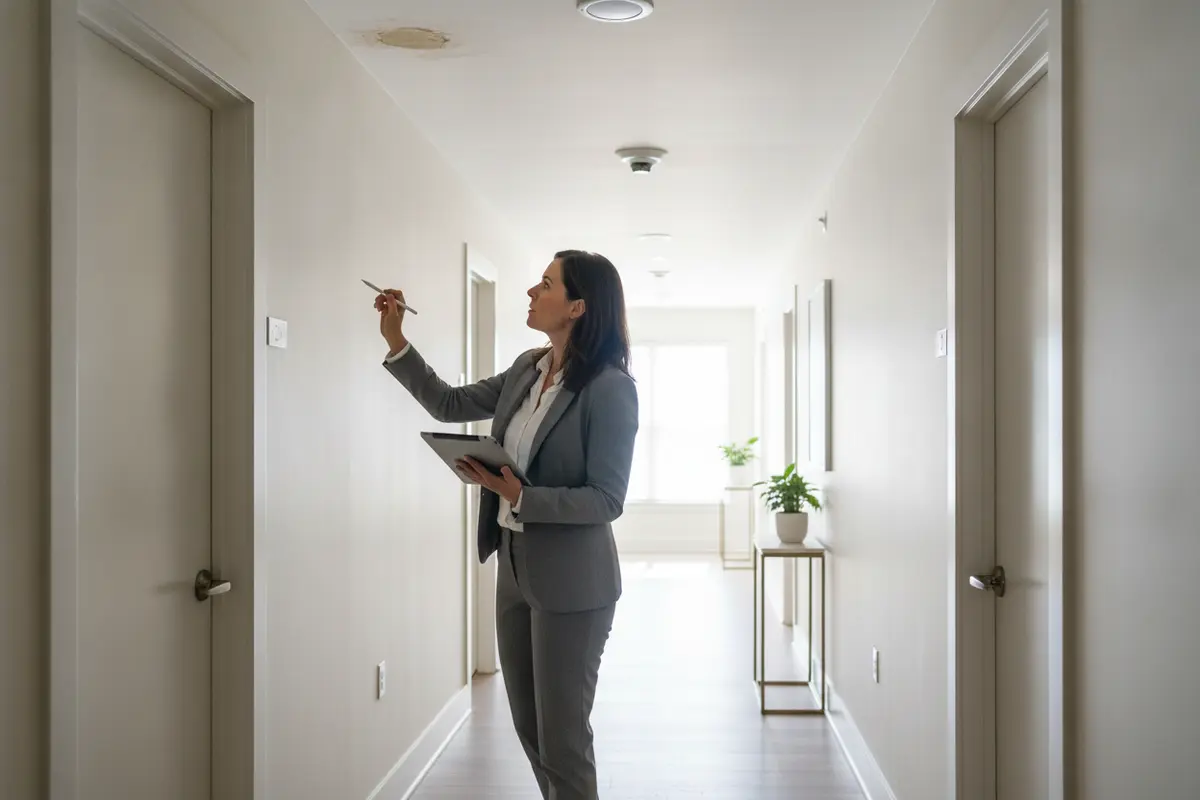
- Visible signs of leaks, moisture, unusual odors, damage, pest activity, or blocked pathways.
- Exterior grounds, drainage, walkways, parking areas, and visible building-envelope concerns.
- Maintenance work in progress and open items from prior inspections.
- Housekeeping and safety conditions that require a prompt response or referral to a qualified vendor.
Staff can use a repeatable route, but should not let the checklist become a substitute for observation. A practical sequence is to start at the site entrance, cover shared spaces and vertical circulation, walk exterior areas, then compare current conditions with prior open items. When the route cannot cover a space, record the limitation rather than implying that every area was reviewed.
This is a visual operational review, not a substitute for specialist testing, code inspection, or a full building-condition assessment. Staff should not attempt work outside their training. When an issue needs technical evaluation, assign it to the appropriate qualified professional and track the response.
How should findings be recorded and resolved?
An inspection has limited value if observations are not turned into action. A consistent record helps owners and managers see what was found, who owns the next step, and whether the issue was closed. A useful entry can be read by someone who did not take part in the walkthrough and still understand what happened.
- Record the basics: Date, time, property, areas reviewed, and the person completing the walkthrough.
- Describe observations clearly: Note the exact location, visible condition, urgency, and any immediate protective action taken. Use photos when appropriate and permitted.
- Distinguish observation from diagnosis: Record what staff can see without claiming a technical cause they have not verified. For instance, note visible water on a floor and its location, then assign investigation to the appropriate person.
- Assign responsibility: Identify the staff member, vendor, or specialist responsible for assessment or repair.
- Set a follow-up point: Track due dates according to urgency, contract terms, and operating procedures. If timing changes, document the reason and next expected update.
- Verify completion: Confirm that work was completed and, where relevant, recheck the condition rather than closing a task based only on dispatch.
- Review patterns: Repeated observations can point to a larger maintenance or capital-planning need.
Consider a recurring door-access problem. A useful record identifies the entrance, times or circumstances observed, any immediate workaround, the party assigned to assess it, and the next check after repair. If the same issue returns, the history helps the owner and manager see that the initial fix did not settle the matter. A brief note saying “door issue” offers much less value because it leaves location, status, and responsibility unclear.
Owners can use inspection records alongside maintenance data and monthly property reporting. Reports should distinguish completed work from open items and explain significant delays, recurring issues, or decisions requiring owner input.
How does inspection planning differ by property type?
The same basic principles apply across multifamily assets, but usage patterns shape the schedule. A conventional apartment building may prioritize common systems, grounds, and recurring service concerns. A student housing property may also need close attention to move-in and move-out periods, high-use shared spaces, and turnover-related maintenance. A mixed-use property may require coordination across residential and commercial areas, access arrangements, and differing operating hours.
For student housing, the timing of a walkthrough can matter as much as its interval. A pre-turnover review may identify visible work that should be assigned before incoming residents arrive; a post-turnover review may help surface issues left by heavy use. These checks should connect to the property’s established turnover plan and access procedures, rather than assume that an occupied unit can be entered without proper authority.
For a mixed-use building, define the boundary between residential common areas and commercial premises. The manager may need to coordinate with commercial tenants or their representatives before entering controlled spaces, while still tracking building-wide concerns such as shared access or visible exterior conditions. The schedule should show who is responsible for each space and how an observation is routed when more than one party is involved.
Owners managing student housing can align timing with the annual student housing turnover cycle. For mixed-use assets, a commercial building management approach may help clarify how responsibilities and access differ across uses.
What should owners ask a property manager?
When evaluating oversight, ask for a concrete explanation rather than a promise that inspections happen regularly. Useful questions include:
- What areas are included in routine walkthroughs, and what is excluded?
- How often are visits planned, and what conditions would make the schedule more frequent?
- Which specialist or vendor inspections follow separate requirements, and who tracks their completion?
- How are urgent observations escalated outside the normal inspection cycle?
- What system records findings, assigned work, due dates, and closure?
- How can owners see open items, repeat issues, and completed follow-up?
- How are unit entries handled in accordance with applicable notice and access requirements?
- Which inspections are performed by on-site staff, and which require a specialist or vendor?
Ask the manager to walk through one anonymized example from observation to closure. The example should show how the condition was recorded, who decided the next action, how progress was communicated, and what evidence supported closing the issue. This reveals more about the process than a calendar alone, because it tests whether documentation and accountability work in practice.
Owners may also set these expectations in a multifamily property management RFP. A clear request can ask candidates to describe inspection scope, cadence, documentation, escalation, specialist coordination, and verification practices. When reviewing proposals, distinguish what is included in routine service from work that requires separate authorization or a qualified outside provider.
How can owners compare inspection approaches?
Compare process details, not just the number of visits. A high visit count does not guarantee useful oversight if observations are not recorded or resolved. Conversely, a risk-based plan can be effective when the manager explains its rationale and shows consistent follow-through. Ask how the process behaves when routine work uncovers a condition that needs immediate attention, technical assessment, or owner approval.
| What to compare | Strong process indicator | Follow-up question |
|---|---|---|
| Coverage | Defined property areas and inspection types | Which locations or systems are outside the routine walkthrough? |
| Frequency | Cadence connected to building condition and risk | What events trigger an additional check? |
| Documentation | Time-stamped findings with clear locations and status | Can owners see open and completed items? |
| Escalation | Urgent issues routed through established procedures | Who is contacted, and how is action recorded? |
| Verification | Follow-up confirms resolution where appropriate | How are recurring conditions identified and addressed? |
| Specialist coordination | Technical work and routine observations are distinguished | Who retains reports from qualified providers? |
Request sample reporting or a walkthrough of the process, subject to confidentiality and availability. Check that the sample shows an owner-readable status, not merely a list of work orders. You can also examine a manager’s property portfolio to understand the types of assets it manages, then ask how operating procedures adapt across them.
What mistakes make inspections less effective?
- Using one interval for every building: A schedule should account for condition, use, systems, and local requirements.
- Confusing a walkthrough with technical testing: Visual observation does not replace required inspections or specialist assessments.
- Recording vague notes: “Needs attention” is less useful than a specific location, condition, responsible party, and next action.
- Closing work without confirmation: Dispatching a vendor does not always prove the underlying issue is resolved.
- Ignoring repeat findings: Recurrence may signal a root cause that merits repair planning or capital review.
- Entering occupied units without proper authority: Follow the lease, applicable law, and established notice and access procedures.
- Treating every observation as equally urgent: Records should make clear what needs prompt escalation and what can follow the normal work process, according to established procedures.
- Failing to communicate access limits: If an area could not be reviewed, the owner should know what remains unverified and what is needed to complete the check.
When findings point to larger replacements or upgrades, connect operational records to a capital improvement plan. This helps separate routine repairs from longer-term asset needs and gives owners a clearer basis for prioritization.
How can inspection records support owner decisions?
Inspection records are most useful when they help answer practical management questions. Are open items concentrated in one building area? Do similar findings return after work is marked complete? Are issues being escalated promptly? Are seasonal tasks being completed before the relevant period? These questions turn an inspection log from an archive into an operating tool.
Owners can review a small set of consistent fields each month: walkthrough date and coverage, new findings by priority, work assigned, items still open, repeat observations, and completed follow-ups. The point is not to create a new performance score without context. It is to understand what the property team saw, what it did next, and what still needs a decision.
For example, suppose three monthly records show similar moisture observations in separate locations. The owner and manager can ask whether the pattern relates to a broader system, whether the initial repairs were verified, and whether a specialist assessment is appropriate. The records do not by themselves establish a cause, but they make the evidence visible and help frame the next investigation.
Inspection trends can also inform operating and capital planning. A cluster of aging components or repeated repairs may merit discussion in the property’s multifamily operating budget or longer-range planning. Keep the distinction clear: an observation can prompt review, but it is not a substitute for a qualified condition assessment or a documented owner decision.
How should an owner review the inspection plan each year?
Set a regular point to review whether the plan still reflects the asset. This review can coincide with budget preparation or another established planning cycle. Compare planned inspections with completed records, outstanding issues, turnover patterns, specialist reports, and upcoming projects. Note any gaps, such as a system with no clear responsible party or a recurring area that receives no targeted follow-up.
Then agree on practical adjustments. These could include clarifying coverage, changing the timing of a seasonal review, assigning a record owner, or adding a recheck after a specific repair. Avoid changing frequency simply to make a schedule look more intensive. Each change should have a reason and should identify what evidence will show whether the revised approach is working.
When ownership or management responsibilities change, make the handoff explicit. Transfer inspection calendars, open findings, relevant specialist records, access procedures, and the names or roles responsible for follow-up. A new team should be able to distinguish completed work from unresolved items and understand why the schedule was set as it is.
Explore third-party property management
Frequently asked questions
Are monthly inspections required for every multifamily property?
No. There is no universal monthly requirement for every property. Applicable law, contracts, insurance terms, equipment requirements, and the property’s risk profile may set different expectations.
Should a manager inspect every apartment regularly?
Not necessarily. Unit entry must follow applicable law, lease terms, notice rules, and legitimate operating procedures. Managers can conduct common-area walkthroughs separately and arrange unit access when there is an authorized reason.
Are routine walkthroughs the same as safety or code inspections?
No. A management walkthrough is generally an operational observation. Required safety, fire, elevator, mechanical, or code inspections may follow separate schedules and may need qualified inspectors.
What should an owner receive after an inspection?
Owners should be able to understand when and where a review occurred, what significant issues were observed, which actions were assigned, and whether open work was resolved or remains pending.
When should a property be checked more often?
Additional checks may be appropriate after a reported incident, repair, storm, recurring complaint, move-in or move-out period, or change in building condition. The manager should document why the extra review was needed and what followed.
How can owners tell whether the inspection process is working?
Look for consistent records, timely escalation, assigned responsibility, verified closeout, and fewer unresolved repeat findings. Ask how the manager uses inspection results in maintenance planning and owner reporting.
A useful inspection schedule fits the property, respects resident rights, and turns observations into accountable follow-up. Owners should agree on the process and review it when conditions or operating needs change.