A capital improvement budget is more than a list of anticipated repairs. For a multifamily owner, it is a decision tool that connects building condition, replacement timing, funding, approvals, and reporting to the property's operating plan.
Discuss your multifamily property management needs with HH Red Stone
A practical capital improvement budget template separates recurring maintenance from non-routine capital expenditures, then tracks each project by asset. Record condition, priority, timing, projected cost, actual cost, variance, funding source, approval status, and owner impact. That structure helps distinguish an urgent building-system risk from a desirable upgrade and gives owners a clearer view of how reinvestment may affect NOI. Resident experience, and long-term asset value. The first step is defining which work belongs in the budget and which belongs in annual operations.
What Should Be Included in a Capital Improvement Budget?
Answer: A capital improvement budget should identify each project, its scope, condition, timing, projected and actual costs, funding source, approval status, and expected effect on the asset. It should also show which work is routine OpEx and which is non-routine CapEx. For owners, the practical test is simple: every line should support a funding, scheduling, operating, or approval decision.
Classification and project scope
Capital expenditures are generally non-routine investments in major building components, replacements, or improvements. Operating expenses cover the recurring costs of running the property. HUD's Multifamily Asset Management and Project Servicing handbook provides federal guidance for separating operating responsibilities from longer-term asset management decisions. Owners should still confirm accounting treatment with their advisers.
This distinction matters for multifamily owners because a recurring service call should not be blended with a planned roof replacement or major mechanical upgrade. Separating the categories supports clearer cash-flow and asset-performance reporting.
Define each project at a level that supports a decision. A broad entry such as "building upgrades" cannot be compared against bids or inspection findings. Break it into a component, location, and intended outcome. Include the reason for the work, such as end-of-life replacement, recurring failure, compliance need, or resident-facing improvement.
Cost, timing, and accountability fields
At minimum, record the original projection, current estimate, actual spend, and variance. A project budget tool that combines individual project budgets with reporting creates a stronger control than a static list.
- Timing: planned period, phase, start date, and expected completion.
- Funding: replacement reserves, approved capital funding, insurance proceeds, or another documented source.
- Controls: approval owner, procurement status, next action, and decision date.
- Contingency: a clearly labeled allowance that can absorb unforeseen project costs.
Documentation and decision context
Link each line item to inspection notes, scope documents, bids, invoices, permits, and completion records. Thorough documentation supports accurate accounting and tax treatment of reinvestment, but owners should confirm tax treatment with their accounting advisers.
For a broader framework, pair this working template with the capital improvement plan guide. The budget controls individual projects; the plan explains how they fit the property's lifecycle and ownership objectives.
How to Use a Capital Improvement Budget Template
Answer: A useful capital improvement budget template connects each project to its condition, timing, projected and actual activity, funding source, variance, status, and approval owner. That structure turns a list of future work into a controlled decision tool, so owners can compare needs, confirm scope, authorize spending, and explain results in reporting.
Start with the asset and the work category.
Give every line item a precise project name and location. "Building A roof replacement" is more useful than "roof work." The asset manager can connect the entry to inspection notes. Bids, invoices, and future decisions. This detail makes the project easier to scope, approve, procure, and review after completion.
Group entries by practical categories such as building envelope, plumbing, electrical, HVAC, life-safety, unit interiors, common areas, and site improvements.
Separate non-routine capital improvements from recurring operating expenses and routine maintenance. The HUD handbook linked above provides a useful federal reference point, but owners should apply their governing documents and accounting advice to each property. For the annual operating view, use the multifamily operating budget guide alongside this template rather than treating every repair as CapEx.
Use condition and lifecycle fields to plan before failure
Record the current condition, the evidence behind that assessment, and the anticipated replacement window. A condition field might use labels such as good, monitor, poor, or critical, while a notes field identifies the inspection, service history, or observed failure risk. Lifecycle records help owners schedule replacements before a major system fails and causes avoidable downtime. Long-range projections are particularly useful for roofing, siding, and mechanical systems that cannot be replaced responsibly through an ad hoc repair list.
Timing should show the intended year, quarter, or phase, not just "future." Add a status such as proposed, approved, in procurement, in progress, complete, or deferred. This makes the template useful in owner reviews and exposes items that are repeatedly postponed.
Track dollars, funding, controls, and accountability
The financial columns should distinguish the original projection, actual spend, and variance. A budget tool that tracks projected and actual expenditures, then reports the difference, gives stakeholders a clearer view of project performance. Include projected income or other project sources where relevant so the budget reflects both inflows and expenditures, rather than showing only an isolated cost list.
Use a funding field to identify replacement reserves, approved capital funding, insurance proceeds, or another documented source. Add a contingency field or allowance without inventing a percentage or amount. Contingency helps absorb unforeseen project costs, while the template should remain flexible when labor and material conditions change. Finally, record the approval status, decision-maker, next action, and last update date.
| Template fields | Example categories | What to record | Control question |
|---|---|---|---|
| Project and condition | Roofing, HVAC, plumbing, electrical | Location, condition, inspection basis, lifecycle note | What evidence supports this need? |
| Timing and status | Common areas, unit interiors, site work | Planned phase, target period, current status | What must happen next, and when? |
| Projected, actual, variance | Building envelope, life-safety, accessibility | Approved projection, actual activity, variance explanation | Why did performance differ from plan? |
| Funding and approval | Energy systems, security, resident amenities | Funding source, contingency, approver, decision date | Is the work funded and authorized? |
Keep the template connected to inspection records, procurement decisions, and completed-project documentation. That record supports transparent reinvestment reporting. For the broader lifecycle framework, see this guide to capital expenditure planning.
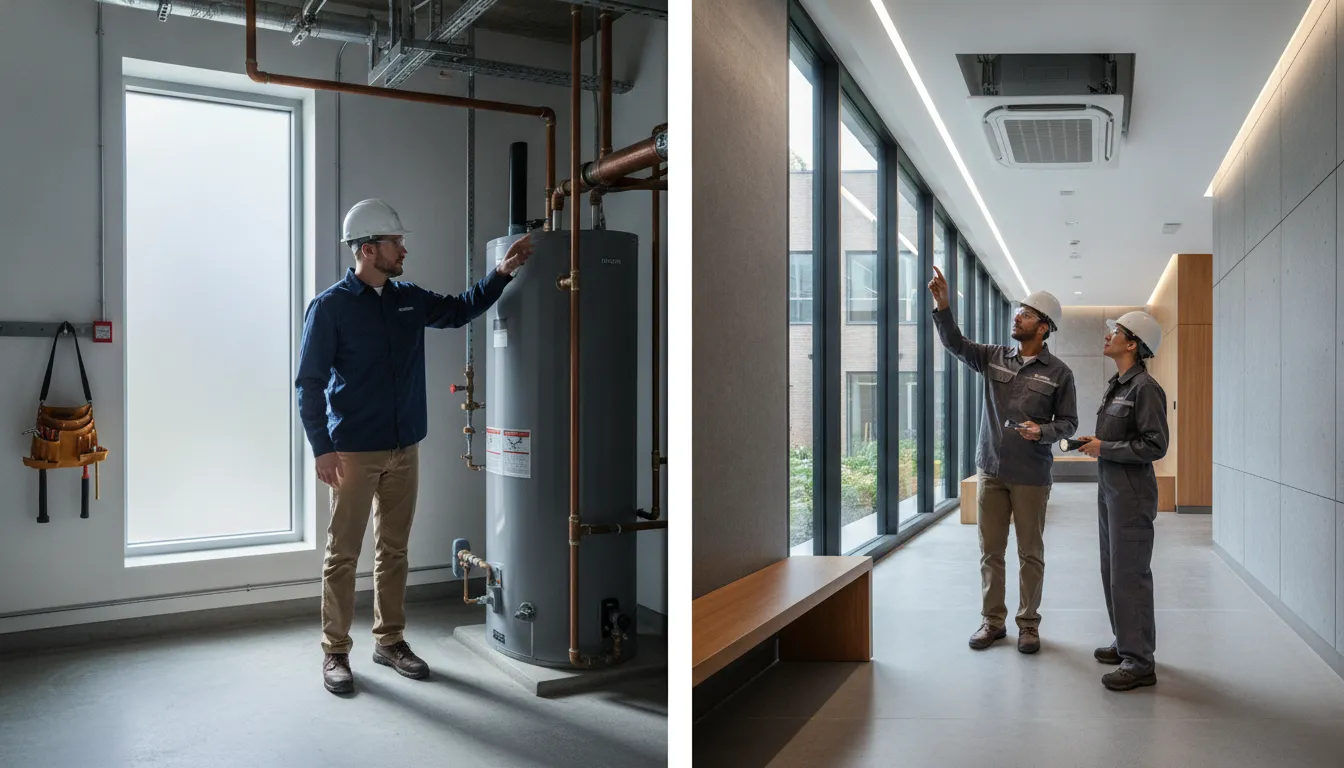
How Do You Prioritize Multifamily Capital Projects?
Answer: Prioritize capital projects first by life-safety and regulatory exposure, then by building-system failure risk, protection of revenue-generating units, resident impact, operating efficiency, and scope readiness. Document the evidence for each ranking, identify the next decision, and revisit priority when inspections, bids, or property conditions change.
1. Resolve safety and compliance exposure first
Start with conditions that could harm residents, staff, or visitors, or expose the owner to a compliance failure. Accessibility work, life-safety systems, electrical hazards, water intrusion, and structural concerns require documented review and appropriate professional guidance. Multifamily owners should prioritize safety, regulatory adherence, and preservation of revenue streams.
2. Prevent failure and protect the resident experience
Next rank systems by likelihood and consequence of failure. Routine inspections can reveal issues that require capital work before damage expands. Plumbing and electrical upgrades may also reduce the risk of widespread water damage or fire-related losses when aging systems are addressed proactively.
Resident-facing work belongs in the same decision framework. Common-area improvements are highly visible signals of property quality and can influence resident perception and retention. Record affected units, expected disruption, accessibility implications, and the communication plan.
3. Test value and confirm scope readiness
Evaluate the likely effect on NOI, asset condition, risk, and resident operations. Each major expenditure should be weighed against anticipated NOI and long-term asset performance. Then confirm that the scope is defined, bids or estimates are available, funding is identified, and approvals are assigned.
- Priority one: immediate safety, compliance, or major failure risk.
- Priority two: work that protects income, prevents escalation, or addresses recurring operational loss.
- Priority three: functional upgrades with a documented operating or resident benefit.
- Priority four: cosmetic improvements that compete for funding with higher-risk work.
For deeper lifecycle guidance, review multifamily capital expenditure planning and keep the ranking rationale in the budget.
How Should a Five-Year Capital Improvement Budget Be Scheduled?
Answer: Build a five-year capital view from condition and useful-life records, then assign each project a realistic phase. Match funding and approvals to that phase, and refresh the schedule at least annually and whenever asset evidence changes. Keep near-term projects detailed enough for active owner decisions.
Build the annual plan inside the five-year view
Use the five-year schedule for lifecycle visibility, then create a detailed annual work plan for the projects that need decisions now. Annual review helps keep financial projections aligned with actual property performance.
Time work to condition and useful life
Do not schedule every project solely by age. Combine service history, inspection findings, reserve information, failure risk, resident impact, procurement lead time, and market conditions. Long-range capital planning helps owners anticipate significant replacement costs and avoid abrupt financial shocks. Tracking useful life supports replacement planning before failures occur.
Match reserve draws to project phases
Separate the planned funding decision from the construction schedule. Replacement reserves are intended for major repairs and improvements and should remain distinct from ordinary operating cash flow. A reserve study can guide annual funding based on estimated replacement costs and system life. If several projects compete for funding, phase the work across the schedule to smooth cash requirements.
Set approvals and update the schedule
- Review inspections, service history, reserve information, and completed-project data.
- Update the five-year line items and move near-term projects into the annual plan.
- Confirm scope, funding source, procurement path, resident communication, and approval owner.
- Compare projected and actual results after completion, then document the variance and update future assumptions.
Use the capital improvement plan guide for the strategic planning layer that sits above this schedule.
Adapting the Template Across Multifamily Asset Types
Answer: Keep the core budget fields consistent across assets, but adjust project categories, timing, disruption controls, resident priorities, and approval thresholds to reflect how each property operates. Student housing may require academic-calendar controls, while mixed-use assets may require tenant coordination and lease reviews.
Off-Campus Student Housing
Student housing requires disciplined coordination around leasing cycles, move-in readiness, shared amenities, and resident communications. Track projects by building, unit type, bed or common-area impact, academic-calendar constraint, and readiness milestone. Avoid assuming a project can occur during peak turnover simply because the line item is funded.
HH Red Stone specializes in off-campus student housing and manages more than 10,000 units across 20-plus properties in eight states. Use that verified company context to understand why a portfolio view can matter, but do not copy one market's timing or scope assumptions into another.
Luxury Apartments
For luxury apartments, separate functional building work from amenity and finish upgrades. Record the resident experience objective, affected amenity, design standard, downtime, and operating-team handoff. Functional improvements may offer more durable value than strictly aesthetic upgrades, although both can influence retention.
Conventional Multifamily
Conventional properties benefit from line items that connect unit turns, building systems, common areas, and recurring maintenance history. Track whether work protects habitability, reduces repeat work orders, supports leasing performance, or prevents a larger replacement. Keep routine maintenance in the operating budget even when it relates to a capital component.
Mixed-Use and Commercial Assets
Mixed-use budgets need separate visibility for residential, retail, office, and shared systems. Add tenant coordination, access restrictions, lease responsibilities, common-area obligations, and business interruption considerations. Communicate pending improvements clearly because residents and commercial tenants may experience different disruption and notice requirements.
For an execution partner with experience across property types, owners can review the HH Red Stone portfolio and its third-party property management services.
How Do Capital Improvements Affect NOI and Asset Value?
Answer: Capital improvements affect NOI and asset value through a combination of operating-cost control, revenue protection, resident experience, and risk management. The effect is not automatic. Owners should evaluate each project against property-specific performance, condition data, execution readiness, and long-term underwriting assumptions.
A disciplined value-add multifamily property management approach treats the budget as an operating decision tool, not simply a list of construction projects.
Separate direct operating effects from capital spending
Start by identifying the direct relationship between the project and the income statement. A building-system upgrade may reduce an operating expense over time, while a replacement may prevent emergency repairs, service interruptions, or avoidable unit downtime. Modernizing systems can reduce operational expenses over time, but owners should model the result using property-specific utility, maintenance, and vendor data rather than assuming guaranteed savings.
Keep routine repairs and recurring operating expenses distinct from non-routine capital improvements. That separation makes NOI reporting more meaningful and prevents a one-time project from being confused with the property's normal operating profile.
Account for resident experience and revenue protection
Not every valuable improvement produces an immediate line-item savings. Improvements to common areas, building function, or resident-facing systems can influence how residents perceive the asset and whether they choose to renew. Common-area improvements are visible signals of property quality, but owners should connect the project to observable indicators such as work-order patterns, leasing feedback, renewal activity, or recurring complaints.
Functional upgrades deserve separate consideration from cosmetic work. Record the intended outcome, affected units or amenities, resident disruption, and evidence used to assess performance. This creates a more useful review than labeling every improvement as value-add.
Use underwriting and owner reporting to test the case
For each line item, document the anticipated effect on NOI, asset condition, risk, and resident operations. Then compare the approved scope and projected cost with actual expenditures and variance. The project may protect value by reducing failure risk or preserving income from revenue-generating units, even when a near-term NOI increase is not supportable.
Owner reporting should show what was planned, what was spent, what changed, and why. Clear capital reporting helps stakeholders understand how reinvestment supports the property's financial health and value strategy. That reporting discipline is especially important across a diversified portfolio.
Connect with HH Red Stone about your capital planning and property operations
Owners who want a more disciplined operating partner can contact HH Red Stone about property operations and capital planning.
Frequently Asked Questions
What is the difference between maintenance and capital improvements?
Maintenance keeps existing systems operating through routine service and repairs. A capital improvement is non-routine work that replaces, upgrades, or materially extends the useful life of a building component. Keep the categories separate so operating performance and reinvestment are reported accurately.
What should be included in a multifamily capital improvement budget?
Include each project or building component, condition and expected useful life, proposed timing, projected cost, actual cost, variance, funding source, approval status, and owner. Add a contingency line and notes for scope, resident impact, procurement, and next steps.
What is a capital reserve fund and why is it necessary?
A capital reserve fund is money set aside for major repairs and replacements, separate from routine operating cash flow. It helps owners address aging roofs, HVAC, plumbing, electrical, and other building components without deferring necessary work or disrupting normal operations.
How do you prioritize capital improvement projects?
Start with immediate safety, regulatory, and building-system risks. Then consider failure consequence, protection of revenue-generating units, resident impact, operating efficiency, and scope readiness. Document the reason for each ranking and revisit it when inspections, bids, or property conditions change.
How often should you update a five-year capital improvement budget?
Review the plan at least annually, then update it when inspections, completed work, actual costs, reserve balances, or market conditions change. Keep the five-year horizon for lifecycle planning while maintaining a detailed near-term schedule.
Ready to Put the Budget Into Operation?
A well-structured capital improvement budget template is most useful when it connects planning with maintenance coordination, owner reporting, approvals, and day-to-day property operations. HH Red Stone can help owners turn those priorities into a practical operating framework across multifamily and related asset types.
Talk with HH Red Stone about a disciplined property operations framework